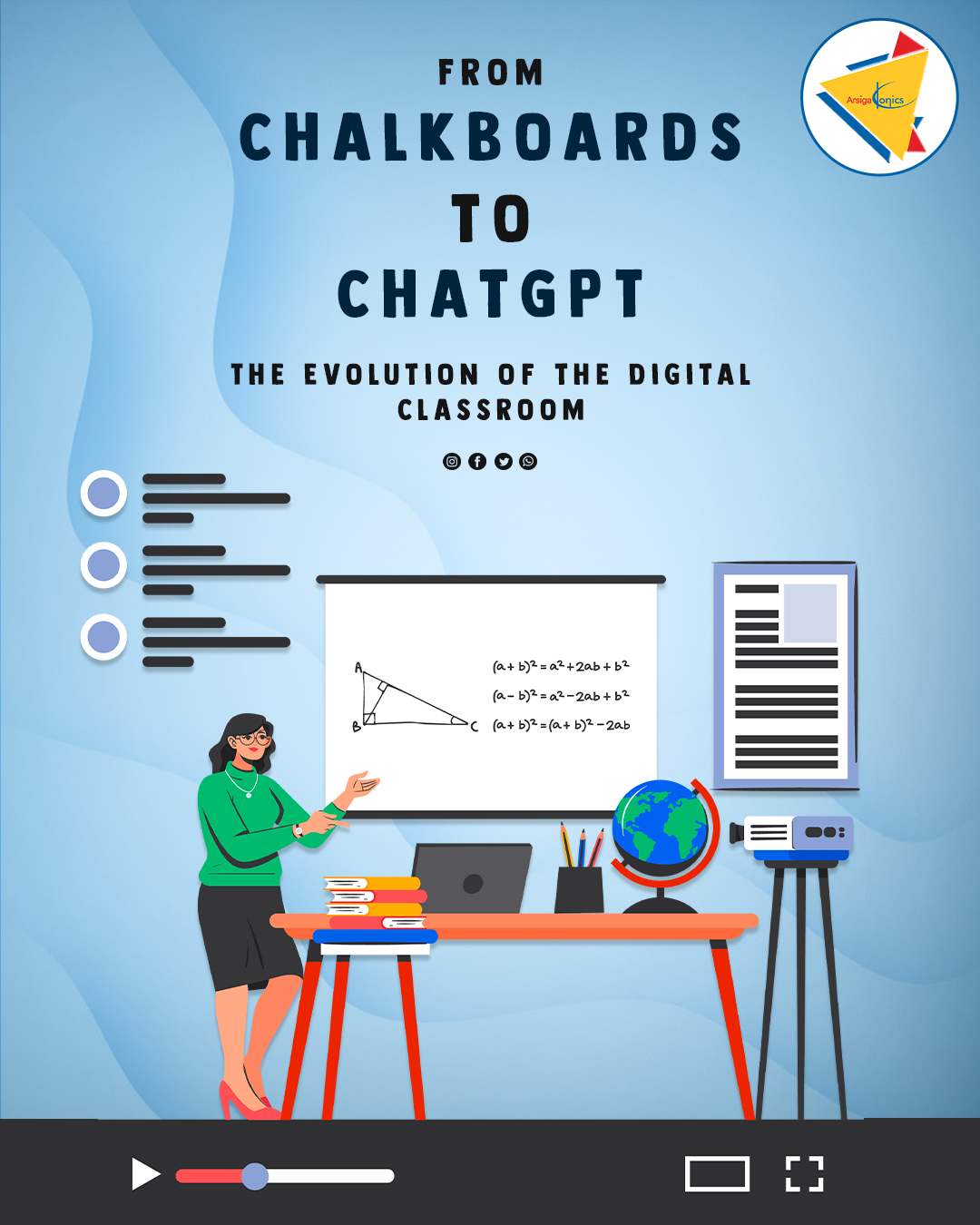
When we talk about a classroom, the image that comes to mind is a chalkboard, a teacher sitting at a table with a chalk box and a duster on it, facing the wooden benches with students and their open books. In these traditional classrooms, teachers did the talking, the students did the listening and assessments were largely memory-based. Let us now understand how the transition from Chalkboards to ChatGPT: The Evolution of the Digital Classroom, happened.
Today, with the evolution of the digital classroom, advanced hybrid learning environments driven by AI, cloud technology, and personalised learning analytics, education has undergone a dramatic shift. The change is not only in the tools but also in the behaviour, attitude, access and teaching methods.
The education sphere today has classrooms that are borderless, unlike in the bygone days when a classroom was defined by a room with four walls, fixed timings, the presence of a teacher, books and attendance. Education is no longer dependent on physical presence.
With digital classrooms a student in a small village in India can take a coding class from a top institute in the U.S. on a mobile phone. A working professional can learn financial modelling at midnight after finishing their job. A teacher takes a class on a digital whiteboard, and multiple students from different towns log into at once.
So how did Digital Classroom evolve?
Phase 1: Classroom Aids & Audio-Visual Tools:
The first phase showed an important insight that students learn better when information is visual, interactive, and multimedia-based. This led to the introduction of digital education that comprised of projectors, CD based multimedia educational content and occasional access to computer labs.
Phase 2: E-Learning & EdTech Platforms
The second phase brought in its wake the rise of broadband and smartphones. Suddenly, digital content was available everywhere. Schools began using LMS (Learning Management Systems), teachers started sharing PPTs, recorded videos, PDFs, and quizzes online. Assignments could be submitted digitally. YouTube became a learning platform without planning to be one.
Phase 3: Onset of the Pandemic
The third phase was a period that normalised digital tools. The reason: COVID-19. This pandemic was the biggest education disruptor. Students attended classes from the comfort of their homes. Software like Google Classroom, Teams, Zoom, WebEx became the new chalkboard. Teachers learned how to screen-share, annotate, conduct polls, and engage remotely. Parents became co-educators.
Phase 4: AI & Personalised Digital Learning
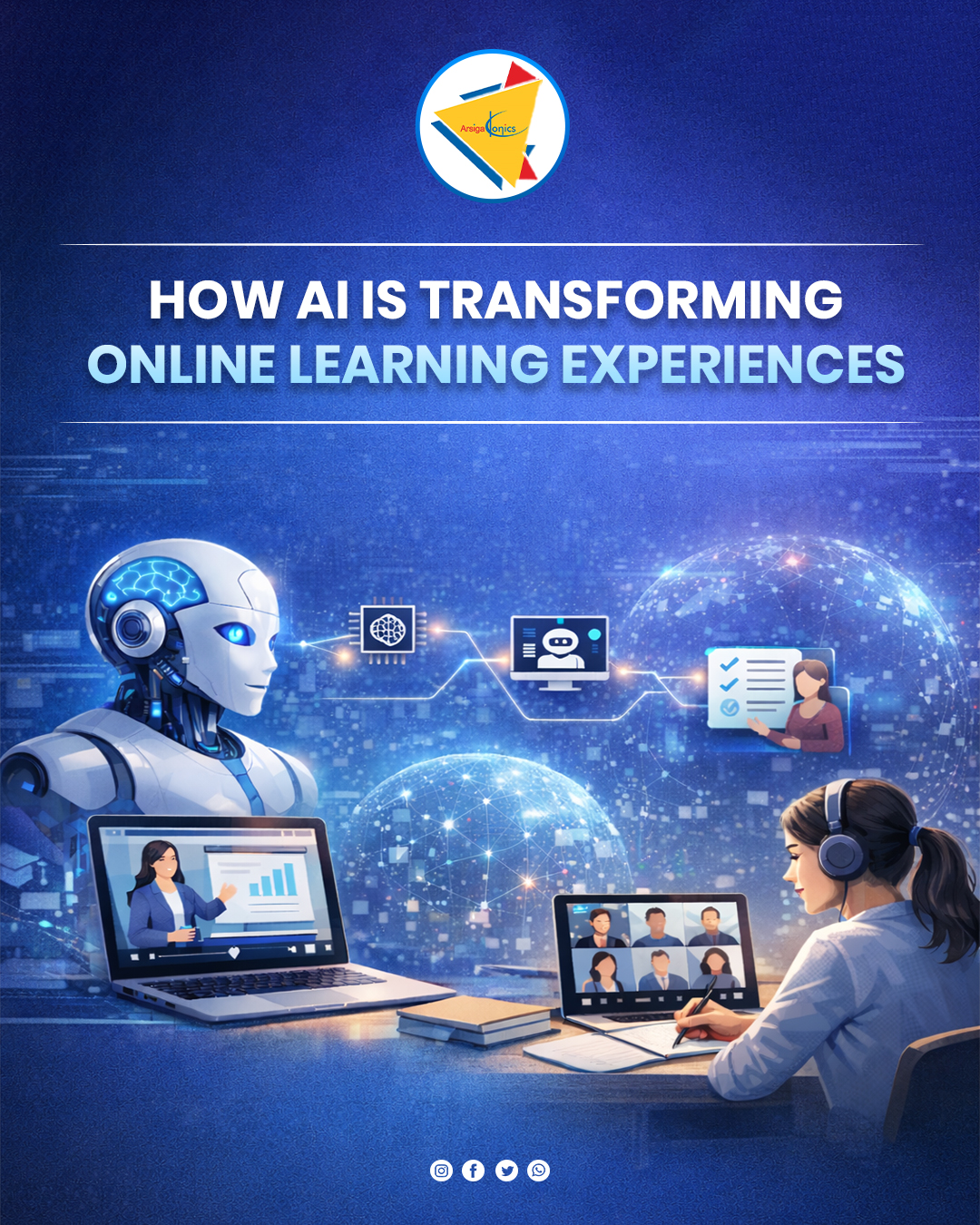
Currently, in the fourth phase, Generative AI tools have become a norm for both learners and educators. A student can ask any query and ChatGPT, an AI powered tool will give the answer. A teacher can ask ChatGPT to generate lesson plans and question banks. Institutes can analyse learning gaps through dashboards and data. AI enables personalised, real-time, adaptive learning – something the traditional one-size-fits-all classroom could never accomplish.
Unlike digital classroom, traditional classroom cannot teach skills like digital communication, data literacy, online collaboration, AI fluency, problem-solving, and creativity. However, teachers can never be replaced. AI will not be the teacher, but it will assist the teachers to do more. Education is now becoming a blend of human wisdom and AI support. From Chalkboards to ChatGPT, we haven’t just adopted new technology, we have expanded the very definition of learning.