
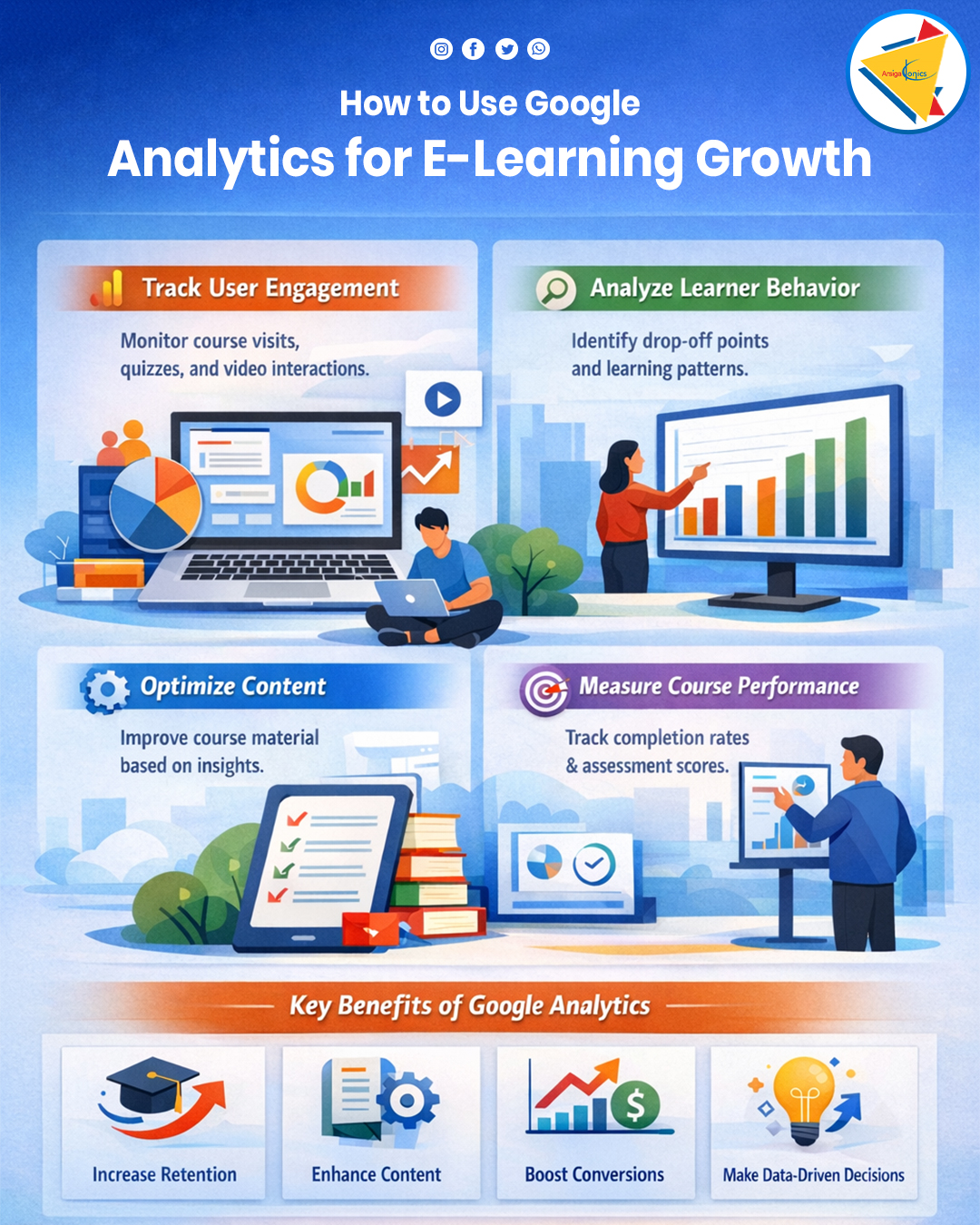
Today, with the digital education landscape, and E learning being the norm, to improve learning outcomes, organisations must understand how learners interact with their content. That’s where tools like Google Analytics help you see what’s working and what needs to change. Google Analytics helps eLearning providers make data-driven decisions that improve engagement, retention, and overall course effectiveness.

Google Analytics consolidates the vast amount of e learning data like page views, videos, drop-offs and completion actions into meaningful insights. This helps the educators gain clarity on what works, what doesn’t work and where learners need support. Thus, Google Analytics helps track learner behaviour across the entire learning journey.
Using Google Analytics for E learning growth:
- Platform Integration & Tracking Setup: Start by integrating Google Analytics with the course website or LMS. Key setup steps include enabling event tracking for learning-specific actions such as course enrolment, lesson completion, video views, quiz attempts, and certificate downloads.
- Learner Engagement Insights: One of the biggest advantages of Google Analytics is understanding how learners engage with the content. Metrics such as average session duration, pages per session, and bounce rate reveal how engaging the courses are. Heatmaps and user flow reports show how learners navigate through lessons, helping educators identify friction points and improve course structure.
- Course Performance Analysis: Google Analytics helps you to analyse which courses or modules perform best by tracking course completion rates. Low completion rates is a sign that there is a need for shorter modules, microlearning formats, or better learner motivation strategies. For example, if mobile users show lower completion rates, it may indicate a need for mobile-optimized design.
- Marketing & Acquisition Insights: Google Analytics can identify where learners are coming from, whether it is through organic search, social media, email campaigns, or paid ads. This helps E-learning marketing growth as by understanding which channels bring high-quality learners who complete courses, organizations can focus marketing investments more effectively.
However, while Google Analytics offer powerful insights, it’s important to respect learner privacy and comply with data protection regulations. It is advisable to use anonymized data, obtain consent where required, and focus on improving learning experiences.
To conclude, Google Analytics transforms raw data into useful insights that drive eLearning growth. By tracking learner engagement, optimizing content, improving marketing effectiveness, and making informed design decisions, organisations can create impactful online learning experiences.










Leave A Comment